- Interlaken Switzerland
- +41762950767
- info@swisslocalguide.ch
Interlaken, whose name translates to “in the middle of two lakes,” is situated between Lake Brienz and Lake Thun, both connected by the Aare River. Due to the very steep terrain surrounding the lakes, easily accessible spots are limited. Here are some insights into the best places to go.
Water temperatures by season: Lake Brienz is glacier-fed, which makes it the colder of the two lakes. Expect these approximate surface temperatures:
Important: Lake Brienz can swing dramatically after heavy rain. Cold glacier runoff can drop the temperature by several degrees within a day — from a comfortable 22°C (72°F) down to 14°C (57°F). Always check conditions before jumping in. Record high: 25–26°C (77–79°F) during exceptional heat waves.
For more on how weather and seasons affect your trip, check our Interlaken weather guide — it covers what to expect each season and why conditions here change so quickly.
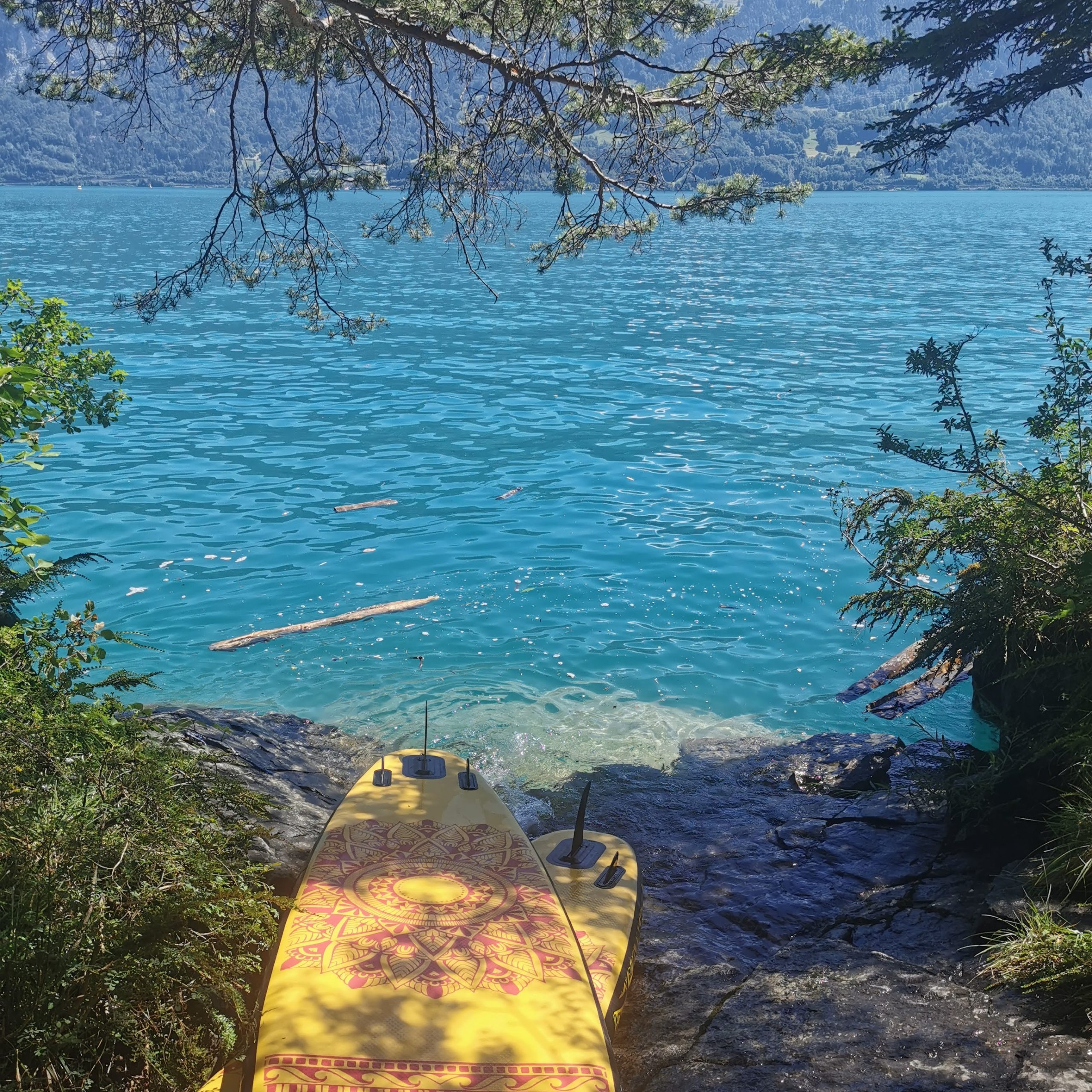
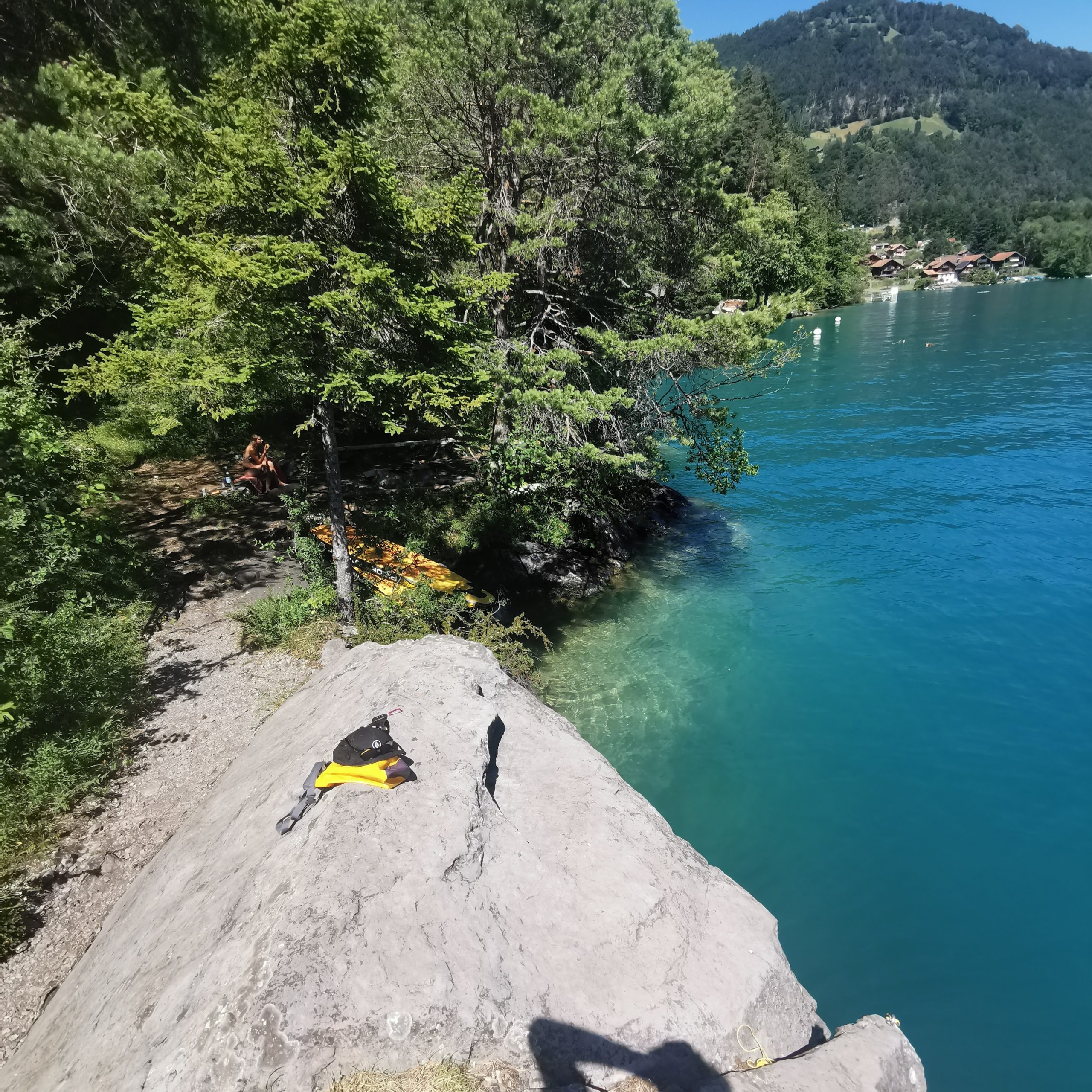
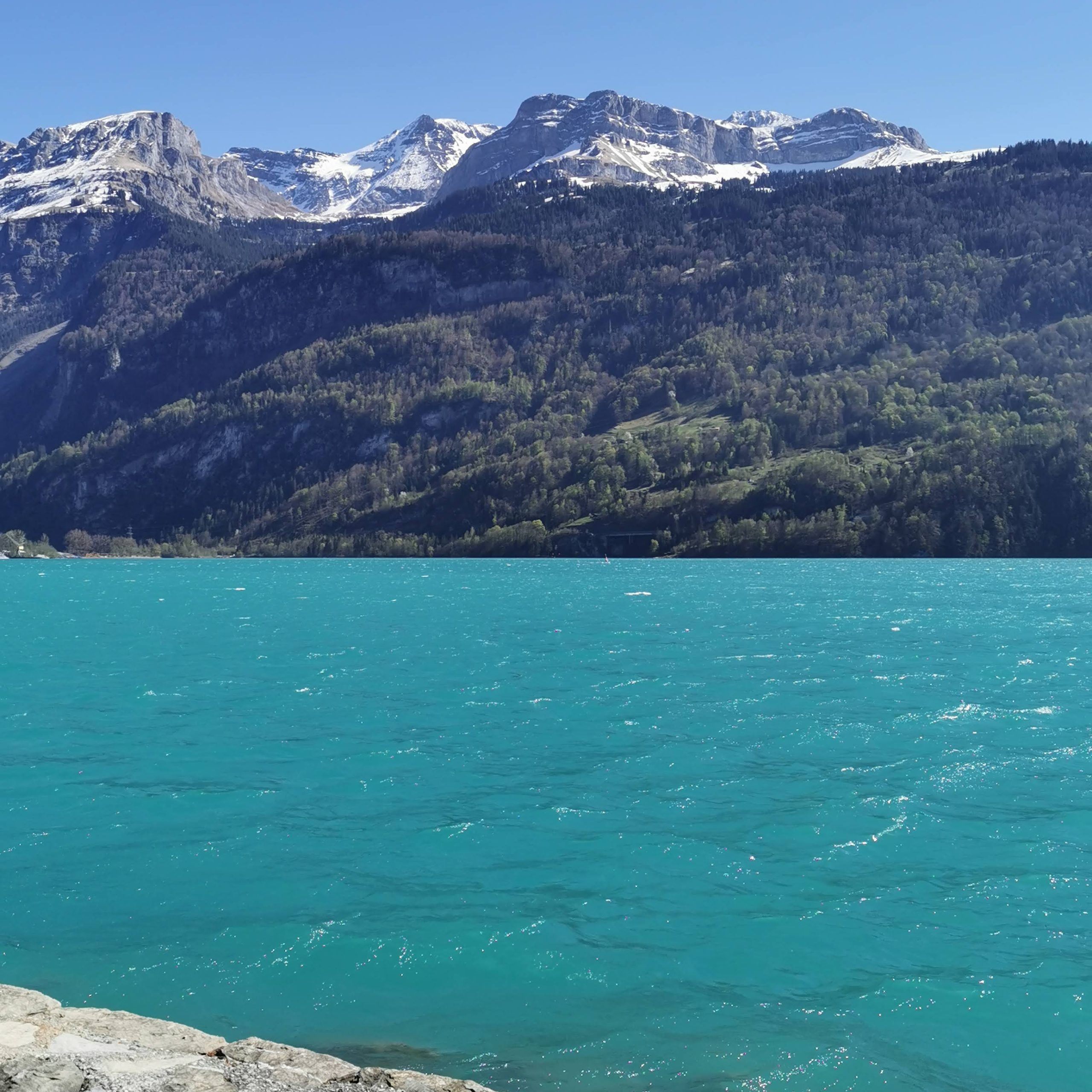
Why is Lake Brienz so blue? The colour comes from glacial flour — extremely fine rock dust created by glaciers grinding against the mountain. Think of a glacier as a giant piece of sandpaper slowly moving across stone. The particles it produces are so tiny that they stay suspended in the water instead of sinking. When sunlight hits these particles, they scatter and reflect the light back — particularly the blue and green wavelengths — which is what gives the lake its turquoise colour. The shade changes depending on the time of year (more glacier melt in summer means more sediment), the time of day, and the angle of the sun. On an overcast morning in June the lake can look almost grey. On a sunny afternoon in August it can be electric blue. Same lake, completely different colours.
The easiest access point to Lake Brienz is behind the Interlaken Ost train station, which also serves as a stop for cruise boats. From there, you can follow the Aare River upstream, and it will lead you to Lake Brienz.
Numerous opportunities for swimming are available once you pass the river and reach the lake, marked on the map. These are mostly stone/pebble beaches with easy and safe access. Should the lake water prove too cold, but you still wish to swim near the lake, we recommend visiting The Beach. This swimming area features a pool with warmer water in addition to lake swimming, along with a restaurant and other amenities. There is entry cost of 6 Chf for adults and 4 Chf for kids
After all that exploring, our suggested route wraps up with a stop at “Sweet Ride” food truck. You’ll find it by Lake Brienz, serving up great coffee and what many say is the best swirl ice cream in Interlaken, all with a fantastic view of the lake. If you don’t want to walk all the way back, another option is the bus stop close to the Sweet Ride, where you can catch buses 102 and 103 back to Interlaken Ost station.
This route is awesome for views, but it can get pretty busy, especially when it’s warm out. If you’re after something a bit more relaxed, just jump on bus 102/103 from Interlaken Ost station to the Bönigen See stop. You’ll still get your Sweet Ride ice cream, but from there, you can wander along the lake. The further you go, the fewer folks you’ll run into!
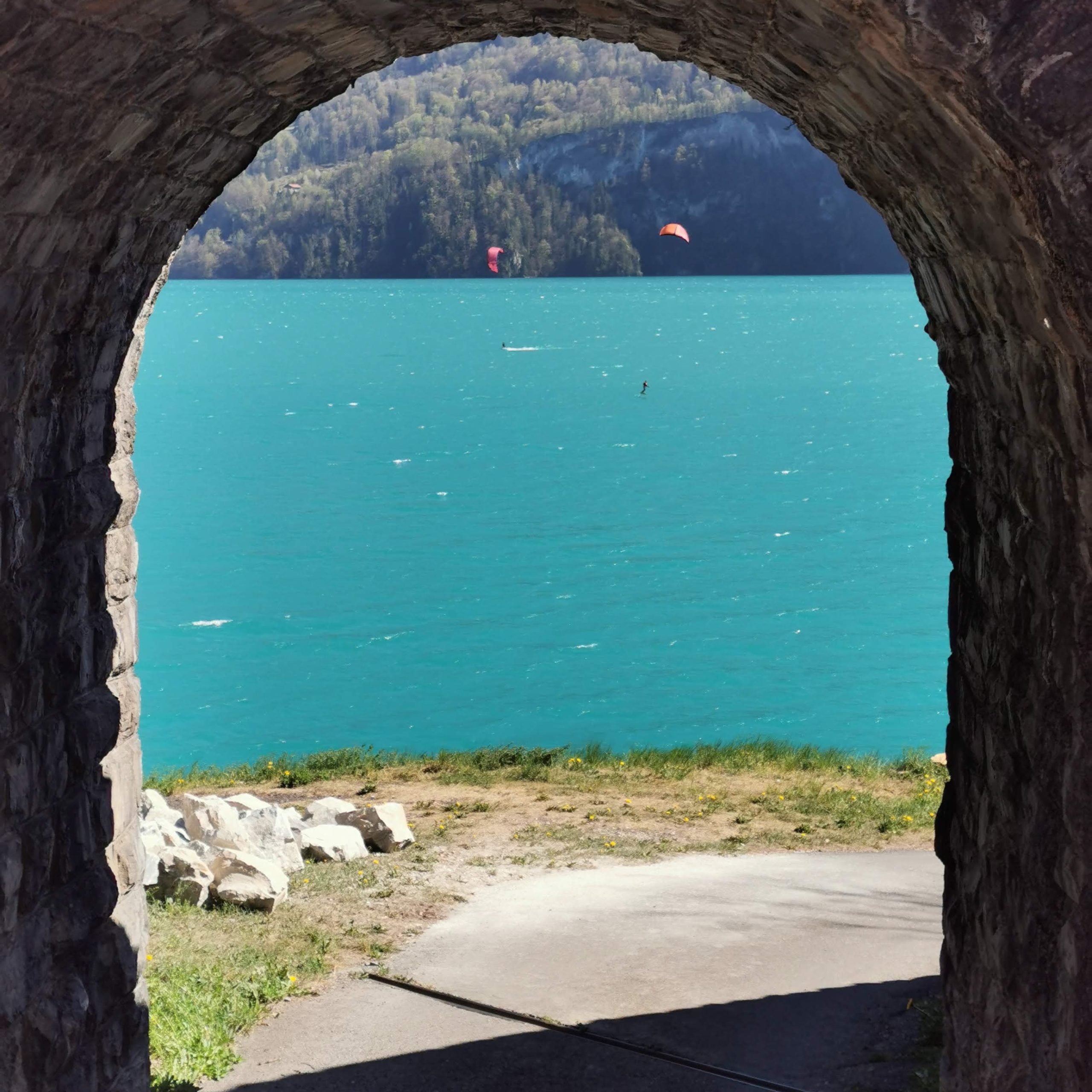
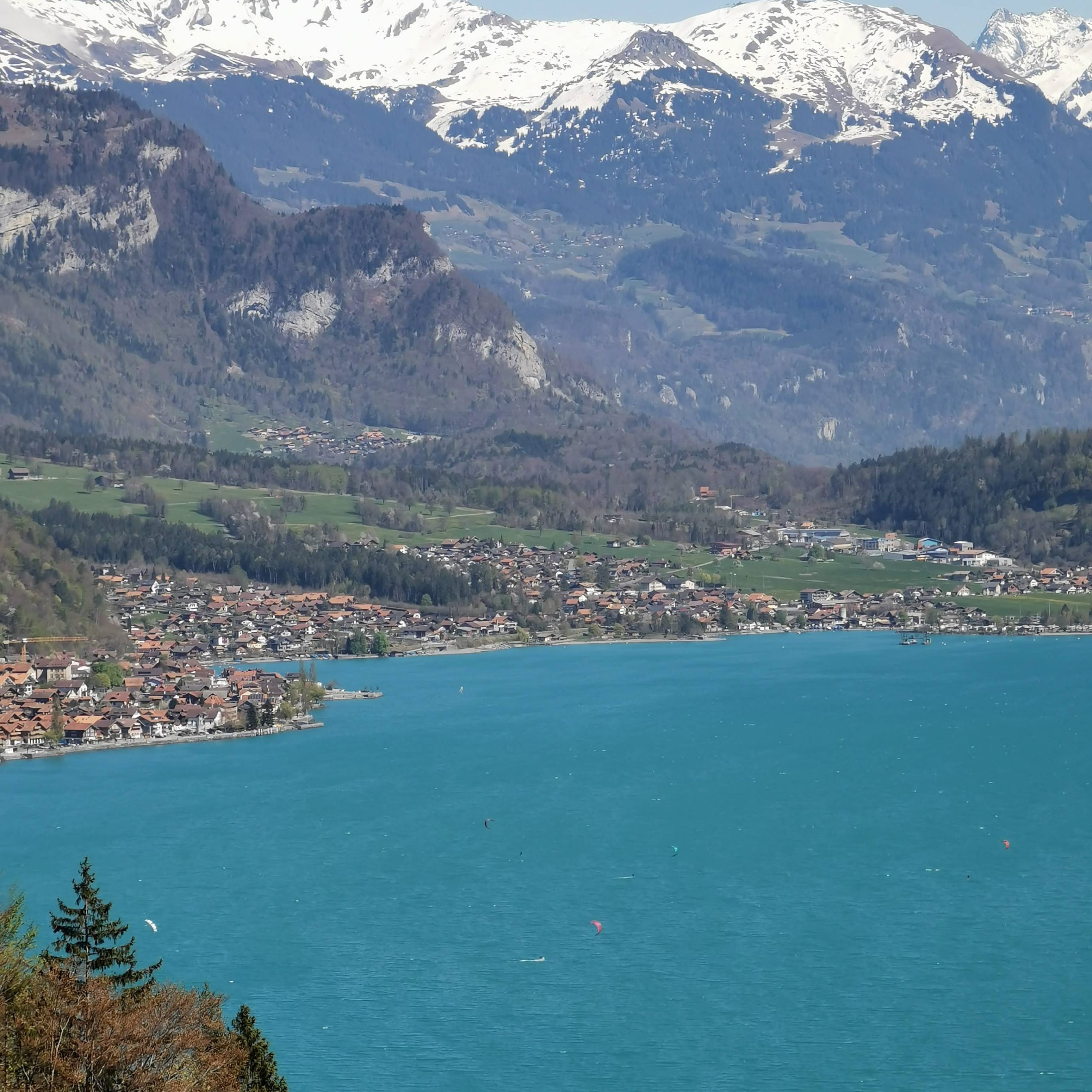
Water temperatures by season: Lake Thun sits downstream from the glacier water, so it is warmer and more stable than Lake Brienz:
Lake Thun is generally 1–3°C (2–5°F) warmer than Lake Brienz at any given time, and the temperature is more predictable. If you want a more comfortable swim, Lake Thun is the safer choice. Record high: around 24°C (75°F).
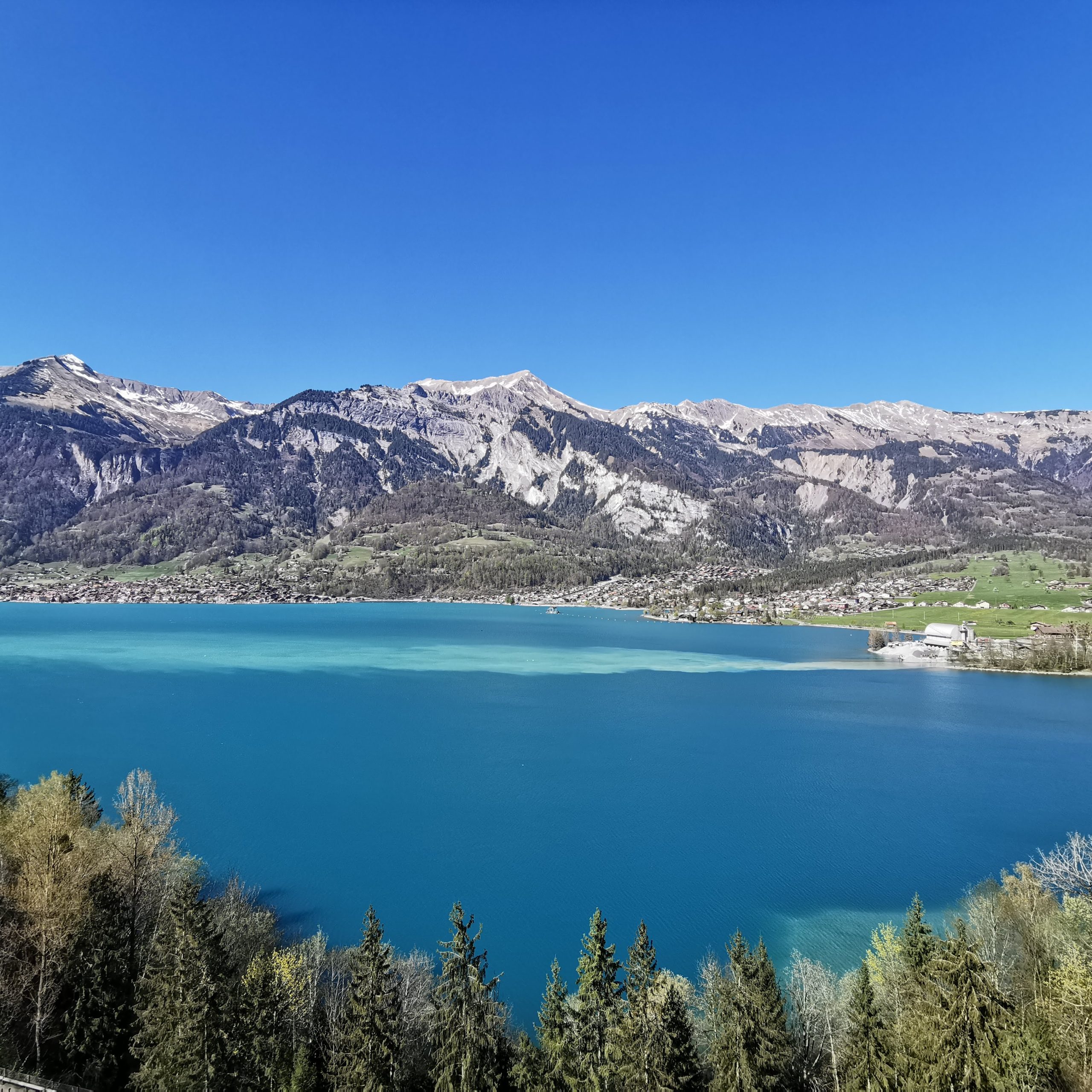
Why does Lake Thun look so different? Two lakes just a few kilometres apart, yet completely different colours. The reason is simple: Lake Brienz acts as a natural filter. The glacial flour that gives Lake Brienz its turquoise colour has to settle somewhere — and most of it settles to the bottom of Lake Brienz before the water ever reaches Lake Thun. By the time the Aare flows out of Lake Brienz and through Interlaken, it has already lost most of its sediment.
If you get up high enough — Harder Kulm is a good spot — you can actually see the colour collision where the Aare meets Lake Thun. The river water is still slightly cooler and denser than the lake surface, so it sinks below the surface layer, which helps any remaining fine particles settle out even faster. The result: Lake Thun has crystal-clear, emerald-green water instead of the milky turquoise of Lake Brienz. Same source water, completely different character.
Getting to Lake Thun from Interlaken center, while not offering a scenic walking path, can be done via two convenient options:
Once at Lake Thun, you’ll find various swimming options.
Follow the main swim area path (red line on our map) from the bus stop to reach the swimming area. You’ll pass through a parking lot where you’ll find Restaurant Neuhaus, known for its local fish dishes. Adjacent to the restaurant is Moutainsurf, a rental service offering everything from paddleboards to boat rentals. Don’t forget to check our map for a secret paddleboard suggestion!
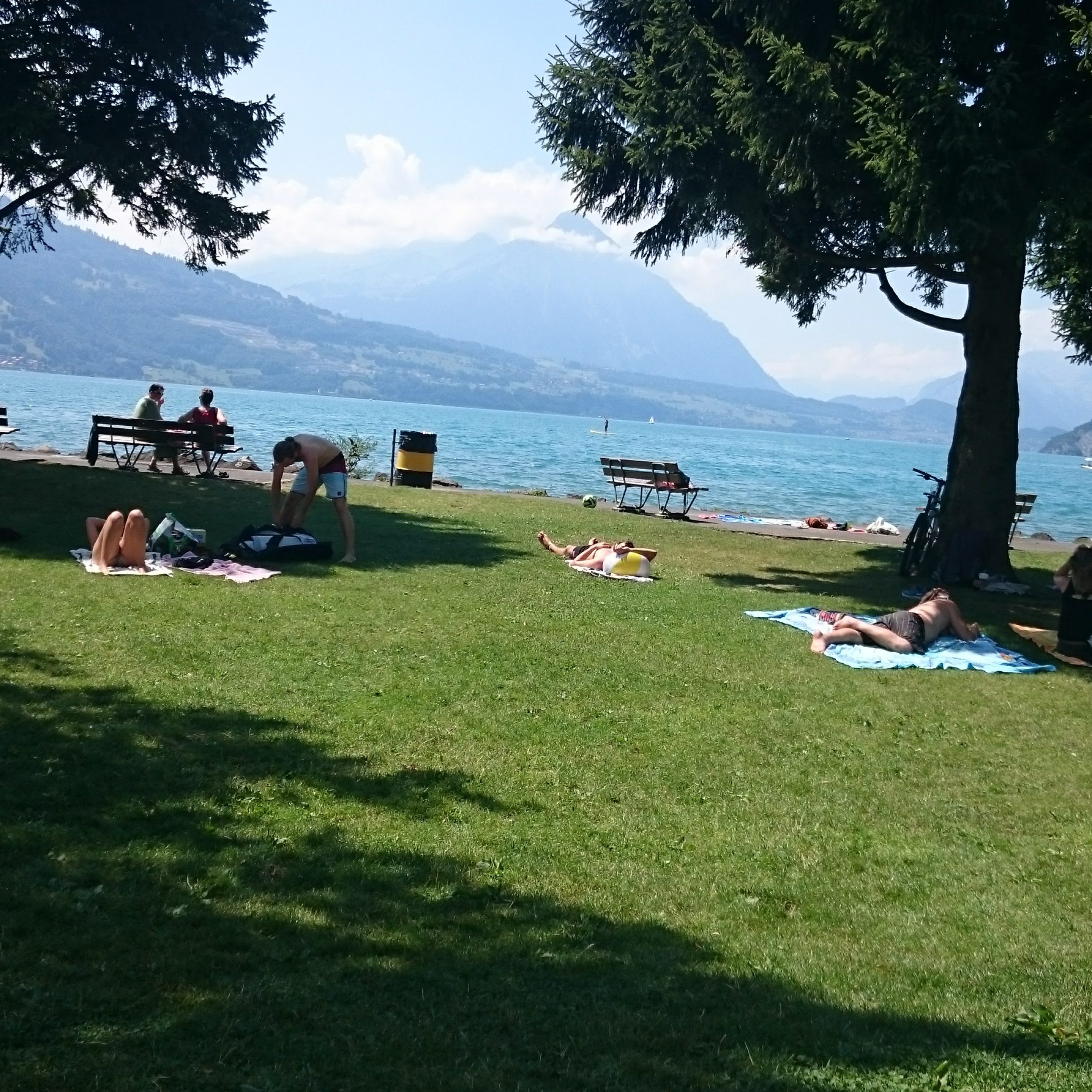
Just past a private beach (5 francs per person), you’ll discover a very similar-looking area that is free – this is the main swimming spot.
A few of the best ones we keep off the page on purpose — the spots that take a bit of local knowledge to find and a short walk most people won’t bother with. If you’d rather skip the guesswork and spend the day at one of those, maybe pairing it with a hike, that’s the kind of thing we do on a private day out.
For a more remote experience, consider these two alternatives:
Water temperatures by season: The Aare’s temperature near Interlaken is closely tied to Lake Thun, since the lake water feeds the river:
The water in the river rarely exceeds 22°C (72°F) near Interlaken because it is glacier-fed. Peak temperatures are reached in the afternoon, usually around 4 pm, as the water warms through the day.
The Aare is the longest river that both begins and ends entirely in Switzerland — 295 km (183 miles) from the Grimsel Pass to where it joins the Rhine. It is fed by the Aare Glacier and powers more than 40 hydroelectric plants along its course, making it one of the country’s most important sources of electricity.
The section that matters to you runs between Lake Brienz and Lake Thun, right through the middle of Interlaken. One thing to know upfront: you cannot paddle or kayak from one lake to the other through Interlaken. There are water level regulation barriers in the river that prevent it — so the two lakes are connected by the Aare but not in a way you can travel through by boat.
What you can do is swim in the river itself. River swimming is hugely popular across Switzerland — in Bern, floating down the Aare is practically a national pastime. We cover the full Aare floating experience from Thun to Bern in our things to do in Interlaken guide, but here we are talking about swimming in the Aare right in the centre of Interlaken.
Close to Interlaken Ost station there is a small park with easy access to the river — this is the first good entry point. In peak summer you will see kids jumping off bridges and plenty of locals doing the same. The water flows from Interlaken Ost toward Interlaken West, so if you hop in at the east end, the current carries you westward.
A few things to be aware of. The river temperature can change noticeably even within the same day — cruise boats have stops near the swimming areas, and when they pass through, they churn up colder water from below the surface. The current is strong, so either wear a life vest or be a confident swimmer. On the map above you can see the spots where you can safely enter and exit the river — stick to those. These are the only places with proper access, and more importantly, safe exit points. If you plan to do a short float, know that there are two water level regulation barriers toward the western end where the water funnels underneath — the current can pull you in. Make sure you exit the water well before reaching these.
One suggestion for making it a proper experience: hop into the river near Interlaken Ost station, float downstream, and finish with coffee, waffles, or cake at Aareburg Hotel café — it sits right by one of the exit points and is a great way to end a lazy river afternoon.
These are the most accessible swimming spots near Interlaken — the ones most visitors find on their own. If you want something more remote, a private beach with fewer people, or a full day combining a hike with a lake swim, that’s exactly what our Private tour guide is for. Tell us what you have in mind.